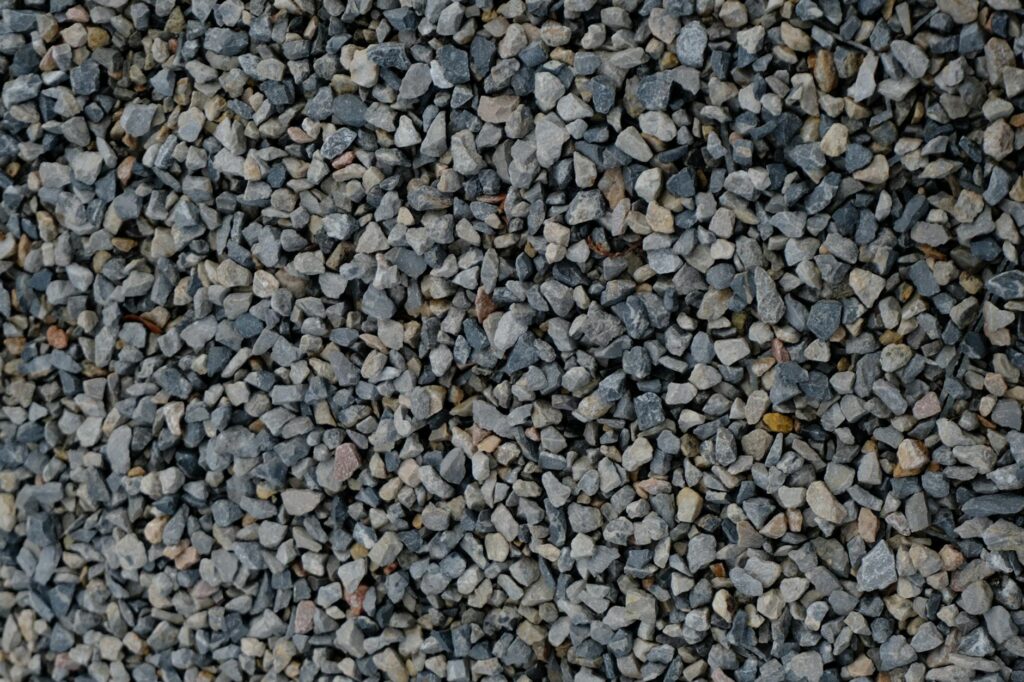
Crushed stone and pea gravel are both popular aggregate materials, but they serve different purposes and perform differently depending on your project. Crushed stone offers better compaction and stability for driveways and foundations, while pea gravel provides aesthetic appeal and comfort for pathways and landscaping. Your choice depends on your project’s functional requirements, budget, and desired appearance.
Understanding Crushed Stone and Its Best Uses
Crushed stone, also called crusher run or #411 stone, consists of jagged rock fragments ranging from dust to 1.5 inches in size. The angular edges lock together tightly, creating a stable, compacted base that resists shifting under weight and pressure. This mechanical binding makes crushed stone the superior choice for structural applications.
Crushed stone excels in driveways, parking areas, road bases, and building foundations. It compacts to roughly 95% density when properly tamped, providing a solid foundation that prevents settling and erosion. The irregular shapes create friction between layers, preventing lateral movement and providing excellent drainage through the gaps between stones.
Costs typically range from $25 to $50 per ton, depending on your location and local quarry availability. A typical driveway project might require 20-30 tons of crushed stone, translating to $500-$1,500 in material costs. The investment pays dividends through durability—a properly installed crushed stone driveway lasts 8-10 years before needing refreshing.
Exploring Pea Gravel for Aesthetic and Comfort Applications
Pea gravel consists of smooth, rounded stones about the size of peas, typically between 0.5 and 0.75 inches in diameter. Unlike crushed stone’s angular profile, pea gravel’s smooth surface creates an attractive, decorative appearance while remaining comfortable underfoot. It’s available in various colors including buff, tan, brown, and multicolored mixes.
Pea gravel shines in aesthetic applications like garden pathways, landscape borders, playgrounds, and decorative ground cover around plants and water features. Its smooth texture makes it comfortable for walking barefoot or playing, which explains its popularity in children’s play areas. The rounded stones don’t compact as effectively as crushed stone, maintaining a loose, natural appearance.
Pea gravel typically costs $30 to $70 per ton, often priced slightly higher than crushed stone due to its processing and aesthetic appeal. A 100-square-foot pathway with 4 inches of depth requires approximately 1.2 tons, costing roughly $36-$84 in materials. However, pea gravel requires periodic raking and replacement, with replacement needed every 2-3 years in high-traffic areas.
Key Differences: Stability, Drainage, and Maintenance
Compaction and Stability: Crushed stone’s angular design allows it to interlock and compact firmly, making it ideal for load-bearing applications. Pea gravel cannot achieve the same compaction level due to its rounded shape, making it unsuitable for driveways or heavy-traffic areas. If you need a solid base, crushed stone wins decisively.
Drainage Performance: Both materials drain well, but in different ways. Crushed stone’s angular shape creates larger voids for water to flow through quickly, preventing puddles and erosion. Pea gravel drains adequately but more slowly, which can lead to standing water in areas with poor slope. For locations with heavy rainfall or poor natural drainage, crushed stone is the safer choice.
Maintenance Requirements: Crushed stone is relatively low-maintenance once properly compacted. You may need to rake or grade it annually and add fresh material every few years. Pea gravel requires more frequent maintenance—expect to rake monthly and replace sections as stones scatter or migrate, especially in high-traffic zones. If low maintenance is important, crushed stone requires less upkeep.
Cost Comparison Over Time: While initial material costs are similar, lifetime costs differ significantly. A crushed stone driveway might cost $500-$1,500 upfront but lasts 8-10 years with minimal maintenance. A pea gravel pathway costs less initially but needs replacing every 2-3 years, accumulating higher long-term expenses. Calculate your project’s lifespan when budgeting.
How to Calculate Your Aggregate Needs Accurately
Proper material estimation prevents costly overages and project delays. Start by measuring your project area in square feet and determining desired depth—crushed stone for driveways should be 4-6 inches deep, while pea gravel for pathways works well at 2-4 inches. Use our gravel calculator to convert your measurements into tons of material needed, accounting for local density variations and compaction rates.
Input your project dimensions, select your material type, and the calculator provides exact tonnage required plus estimated costs based on your regional pricing. This eliminates guesswork and ensures you purchase the right quantity. Always order 10% extra to account for settling and handling loss during installation.
Frequently Asked Questions
Can I use pea gravel for a driveway?
Technically yes, but it’s not recommended for regular vehicle use. Pea gravel won’t compact adequately to support vehicle weight, causing ruts, washboard patterns, and rapid migration of stones. While pea gravel works for light-use decorative driveways or parking areas with infrequent use, crushed stone provides far superior performance and longevity for active driveways.
Is crushed stone safe for playgrounds?
No—crushed stone’s sharp, angular edges make it uncomfortable and potentially unsafe for barefoot play. The jagged surfaces can cause scrapes and cuts. Pea gravel or engineered play chips are proper choices for children’s play areas, offering safety impact attenuation and comfortable surfaces. Always verify your playground material meets ASTM F1951 standards for impact performance.
How do I prevent pea gravel from scattering?
Install landscape edging around pea gravel beds to contain stones and prevent migration. Use rigid metal or plastic borders anchored firmly at ground level. Consider adding a geotextile fabric beneath pea gravel to reduce stone sinking into soil while maintaining drainage. Rake regularly and refresh top layers annually to maintain depth and appearance.
Which material is better for garden pathways?
Pea gravel is ideal for most garden pathways—it’s aesthetically pleasing, comfortable underfoot, and complements landscaping naturally. Use 2-3 inches of depth for low-traffic pathways. If your pathway experiences heavy foot traffic or needs to support the occasional wheelbarrow, consider a hybrid approach: install 4 inches of crushed stone as a base layer, then top with 2 inches of pea gravel for the best of both worlds.
- Landscape Fabric and Ground Cover Barrier — Essential companion material for both crushed stone and pea gravel projects to prevent weed growth and improve drainage
- Wheelbarrow and Garden Cart — Practical tool needed for transporting and spreading crushed stone or pea gravel for DIY driveway and landscaping projects
- Landscape Rake and Shovel Set — Essential hand tools for leveling, spreading, and finishing both crushed stone and pea gravel installations
Related: Key Differences Between Crushed Stone and Pea Gravel
Related: How to Build a Gravel Driveway: Material and Cost Guide