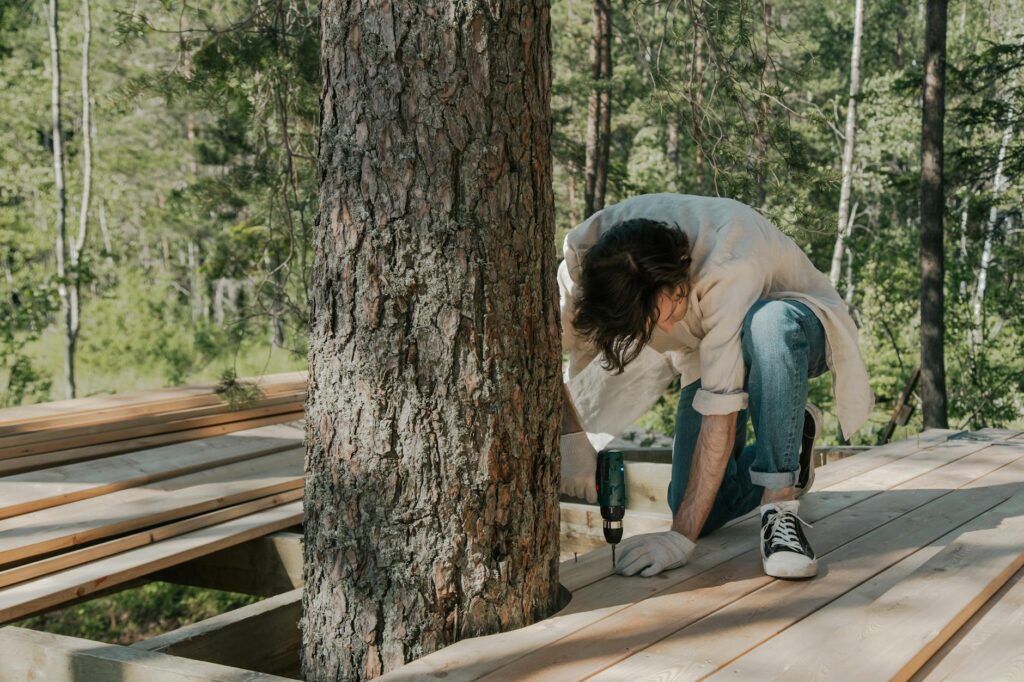
Building a deck in 2025 typically costs between $15 and $35 per square foot for materials alone, with labor adding another $8 to $20 per square foot depending on your location and deck complexity. Understanding the breakdown of material costs, labor expenses, and regional pricing variations will help you budget accurately for your deck project and avoid unexpected surprises.
Deck Material Costs in 2025
The cost of deck materials has shifted in 2025, with pressure-treated lumber remaining the most budget-friendly option at $3 to $8 per linear foot. However, many homeowners are turning to composite decking materials, which cost $8 to $15 per linear foot but offer superior durability and require minimal maintenance compared to traditional wood.
Tropical hardwoods like Ipe and Cumaru provide excellent longevity and natural resistance to rot and insects, ranging from $10 to $18 per linear foot. If budget is your primary concern, pressure-treated pine or spruce delivers solid performance at the lowest price point. For a 16×12-foot deck, you’re looking at approximately $800 to $1,500 just for the decking boards.
Don’t overlook framing lumber costs. You’ll need posts, joists, and rim joists, which typically add $500 to $1,200 for an average-sized deck. Fasteners, including stainless steel or galvanized nails and screws, cost $50 to $150. Additional materials like concrete footings ($3 to $8 per bag), flashing, and sealant can add another $200 to $400 to your material budget. Factor in a 10-15% waste allowance when purchasing lumber, as some boards won’t be usable due to defects or cutting losses.
Labor Costs and Installation Factors
Labor expenses represent a significant portion of your total deck budget. Professional deck builders charge $8 to $20 per square foot for installation labor, with rates varying based on geographic location, local market demand, and the builder’s experience level. Urban areas typically have higher labor costs than rural regions, with some metropolitan areas pushing toward $25 per square foot for skilled contractors.
The complexity of your deck design directly impacts labor costs. A simple single-level platform deck with no built-in features or special angles will fall on the lower end of the labor cost spectrum. Conversely, multi-level decks, curved railings, integrated benches, or decks built on steep slopes require additional time and expertise, pushing labor costs to the higher end or beyond.
Site preparation and foundation work significantly affect overall labor expenses. Decks requiring extensive ground leveling, multiple concrete footings dug below the frost line, or removal of existing structures will incur additional labor charges. Most professionals estimate 3 to 8 hours of labor per 100 square feet, depending on these factors. Always get multiple quotes from licensed contractors and verify their insurance and references before making a hiring decision.
Regional Pricing Variations and Hidden Costs
Deck construction costs vary dramatically across the United States. The Northeast and West Coast command premium prices due to higher labor rates and material availability, with total costs reaching $40 to $50 per square foot. The Midwest offers more moderate pricing at $25 to $35 per square foot, while Southern regions typically fall in the $20 to $30 per square foot range.
Permit and inspection fees, often overlooked in initial budgets, typically range from $100 to $500 depending on your municipality. Some areas charge based on the deck’s total cost or square footage, adding an extra percentage to your expenses. Building codes and frost line requirements also affect costs—areas with deep frost lines require post holes 3 to 4 feet deep, increasing both material and labor expenses.
Additional hidden costs can include grading work, drainage solutions for wet areas, removal of existing structures, or modifications to accommodate utilities. Stairs, railings, and posts with decorative elements increase material and labor costs by 15-25%. If your deck requires special features like built-in seating, storage, or lattice work, budget an additional $10 to $20 per square foot. Stain and sealant application, typically $1 to $3 per square foot, should also be factored into your final budget.
How to Use the Deck Cost Calculator
To get a precise estimate for your specific project, use the deck building cost calculator to input your deck dimensions, material preferences, and local labor rates. This tool accounts for regional pricing variations and provides a detailed breakdown of material and labor costs, helping you plan your budget effectively and compare different material options side by side.
Frequently Asked Questions
What’s the cheapest way to build a deck?
Pressure-treated lumber combined with DIY labor offers the most budget-friendly approach, potentially reducing costs to $8 to $12 per square foot. Building a simple single-level deck without complex features, railings, or stairs minimizes both material waste and labor requirements. However, ensure you understand local building codes and frost line requirements before beginning—improper foundation work can lead to costly repairs down the road.
How much does composite decking add to the total cost?
Composite materials typically add $5 to $7 per square foot compared to pressure-treated wood, translating to roughly 30-50% higher material costs. However, composite decking requires no staining or sealing and lasts 25-30 years versus 15-20 years for wood, making it more economical over the deck’s lifetime. The upfront investment in composite saves money on maintenance and eventual replacement costs.
Can I save money by building the deck myself?
DIY deck building can save 40-60% of labor costs, but requires proper tools, knowledge of local building codes, and realistic assessment of your carpentry skills. Mistakes in foundation, framing, or structural integrity can be dangerous and expensive to fix. If you choose the DIY route, consider hiring a professional for critical elements like footer placement and structural framing while handling simpler tasks yourself.
- Deck Building Materials Starter Kit — Directly relevant to DIY deck builders looking to purchase materials; helps readers source quality lumber, fasteners, and hardware in one place
- Deck Design Software — Complements cost planning by helping readers visualize projects and calculate exact materials needed before purchasing
- Professional Power Tools Bundle — Essential for DIY deck construction; readers planning budgets often need quality tools to complete the project themselves and save on labor costs
If you do work for others professionally, general liability insurance protects you from property damage and injury claims. Hiscox makes it easy to get covered.
Get a Free Hiscox Quote →
Affiliate disclosure: We may earn a commission if you get a quote through this link, at no cost to you.
Related: Deck Building Cost and Material Calculator with Timeline Estimates
Related: Wood Deck vs Composite Deck: Cost Comparison 2025
Related: Wood vs Composite Deck: 2025 Cost Comparison Guide
Related: Wood Deck vs Composite Deck: Cost Comparison 2025
Related: Shed Building Cost 2025: Materials, Permits & Foundation
Related: How to Build a Gravel Driveway: Material and Cost Guide