Pouring concrete is one of those home improvement jobs where you have very little room for error. Order too little and your pour stops short, leaving a cold joint that weakens the structure. Order too much and you’re paying to have excess concrete hauled away or watching it cure in your mixer. Getting your concrete calculation right before you order is one of the most important steps in any DIY concrete project.
This guide explains the math behind concrete volume calculations, how to account for waste and overage, and how to convert between different units so you order with confidence.
The Core Concrete Volume Formula
Concrete volume is measured in cubic yards in the United States. The fundamental formula is simple:
Volume (cubic yards) = [Length (ft) × Width (ft) × Thickness (in)] ÷ 324
Let’s say you’re pouring a concrete patio that’s 12 feet long, 10 feet wide, and 4 inches thick:
- 12 × 10 × 4 = 480
- 480 ÷ 324 = 1.48 cubic yards
Always round up to the nearest quarter yard when ordering ready-mix concrete. In this case, order 1.5 yards minimum, and seriously consider ordering 1.75 to account for spillage, settling, and any slight inconsistencies in your forms.
Standard Thickness Guidelines by Project Type
The thickness of your concrete slab is just as important as the area measurement. Undersized slabs crack and fail under load. Here are the widely accepted minimum thickness standards:
- Sidewalks and footpaths: 4 inches
- Driveways (passenger vehicles): 4 inches minimum, 5–6 inches preferred
- Driveways (heavy vehicles, trucks): 6 inches
- Patios: 4 inches
- Garage floors: 4–6 inches depending on load requirements
- Post footings: Depth varies — typically 12 inches below frost line, 8–12 inch diameter
- Concrete walls: 6–8 inches for retaining walls, 8–12 for structural walls
When in doubt, going slightly thicker adds minimal cost for small slabs but significantly increases durability and load capacity.
Calculating Concrete for Footings and Columns
Round footings and concrete columns use a different formula based on cylinder volume:
Volume = π × r² × Height
Where r is the radius (half the diameter) in feet. For a cylindrical footing 12 inches (1 foot) in diameter and 3 feet deep:
- Radius = 0.5 feet
- 3.14 × (0.5)² × 3 = 3.14 × 0.25 × 3 = 2.36 cubic feet
- 2.36 ÷ 27 = 0.087 cubic yards per footing
If you’re setting 10 fence posts or deck footings, multiply by 10: roughly 0.87 cubic yards. For small footing jobs, this is typically handled with pre-mixed bags rather than ready-mix delivery.
Pre-Mix Bags vs. Ready-Mix Concrete: Which to Use
For small projects under about 1 cubic yard (27 cubic feet), pre-mixed bags from a home improvement store are the practical choice. For larger pours, ready-mix delivery is faster, results in more consistent concrete quality, and is usually more cost-effective.
Pre-mix bag reference for common sizes:
- 40 lb bag: approximately 0.30 cubic feet
- 60 lb bag: approximately 0.45 cubic feet
- 80 lb bag: approximately 0.60 cubic feet
To convert your project’s cubic feet to 80 lb bags: divide total cubic feet by 0.60. For the patio example above (1.48 cu yds = 39.96 cu ft), you’d need roughly 67 bags of 80 lb mix — clearly a delivery job, not a bag job.
Always Add Waste Factor to Your Concrete Order
Professional concrete contractors universally add an overage factor when ordering materials. Here’s why and how much to add:
- Standard flat slabs: Add 5–10% overage
- Irregular shapes or complex forms: Add 10–15% overage
- Slabs on uneven or unprepared subgrade: Add 10–20% overage (uneven ground means inconsistent depth, which uses more concrete)
The cost difference between ordering the exact amount and adding 10% is small. The cost of coming up short — a compromised slab, a second pour fee, or structural failure — is much larger.
Subgrade Preparation and Why It Affects Volume
Before calculating concrete volume, prepare your subgrade properly. A poorly prepared subgrade means your concrete settles unevenly and you use more material to compensate for low spots. Standard subgrade prep includes:
- Remove all organic material (grass, roots, topsoil)
- Compact the subbase — typically 4–6 inches of compacted gravel
- Check for level using a long straightedge or laser level
- Add vapor barrier if pouring an interior slab
Every inch of variation in your subgrade represents additional concrete consumption. A 100 sq ft slab with even 0.5 inch of variation across it uses about 2.5% more concrete than a perfectly level pour.
Reinforcement and Concrete Volume
Rebar and wire mesh take up volume inside your forms, which technically displaces a small amount of concrete. For DIY purposes, this offset is negligible and you should not subtract it from your calculation. Standard reinforcement for residential concrete:
- Patios and walkways: 6×6 wire mesh, placed 1–2 inches above the subgrade
- Driveways: #3 or #4 rebar on 18-inch grid, or 6×6 wire mesh
- Structural footings: #4 or #5 rebar per structural engineer’s specification
Quick Concrete Volume Reference
- 10×10 ft at 4 in = 1.23 cubic yards
- 12×12 ft at 4 in = 1.78 cubic yards
- 20×20 ft at 4 in = 4.94 cubic yards
- 20×30 ft at 4 in = 7.41 cubic yards
- 12×24 ft at 6 in = 5.33 cubic yards (garage slab)
Run your own dimensions through the formula before finalizing your order, and always confirm with your concrete supplier that your calculated volume accounts for their minimum delivery amounts — most ready-mix companies have a minimum order of 1 yard.
Use our free DIY calculator to get accurate material estimates for your next home improvement project.
- Concrete Calculator Tool/App — Complements the manual calculation guide by offering a digital tool for quick verification of concrete measurements on-site
- Concrete Mix Bags (60-80 lb) — Direct product for readers planning smaller concrete projects who need to purchase pre-mixed concrete bags
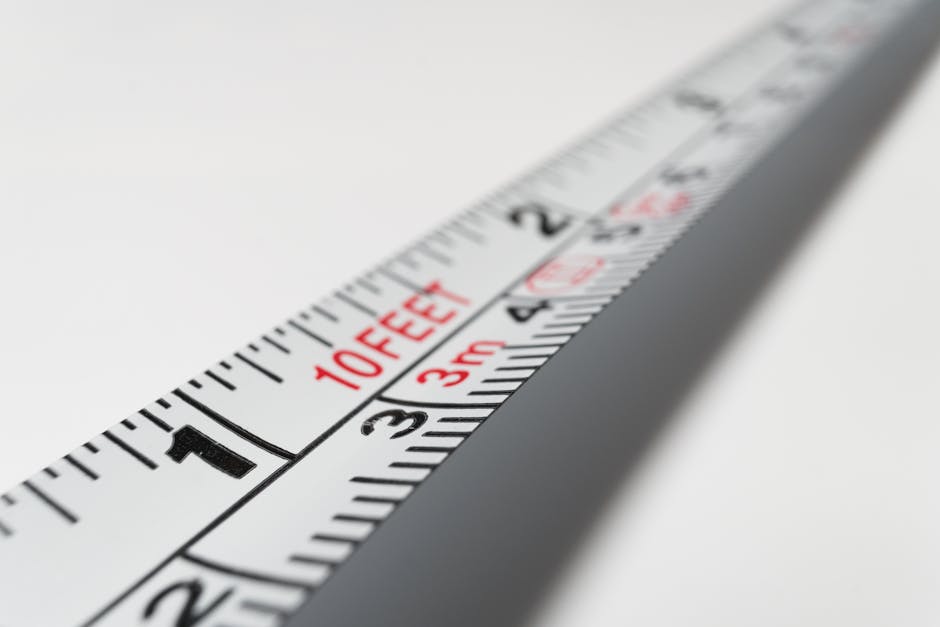
- Measuring Tape (100 ft) & Measuring Wheel — Essential tools for accurately measuring dimensions needed to calculate concrete requirements before ordering