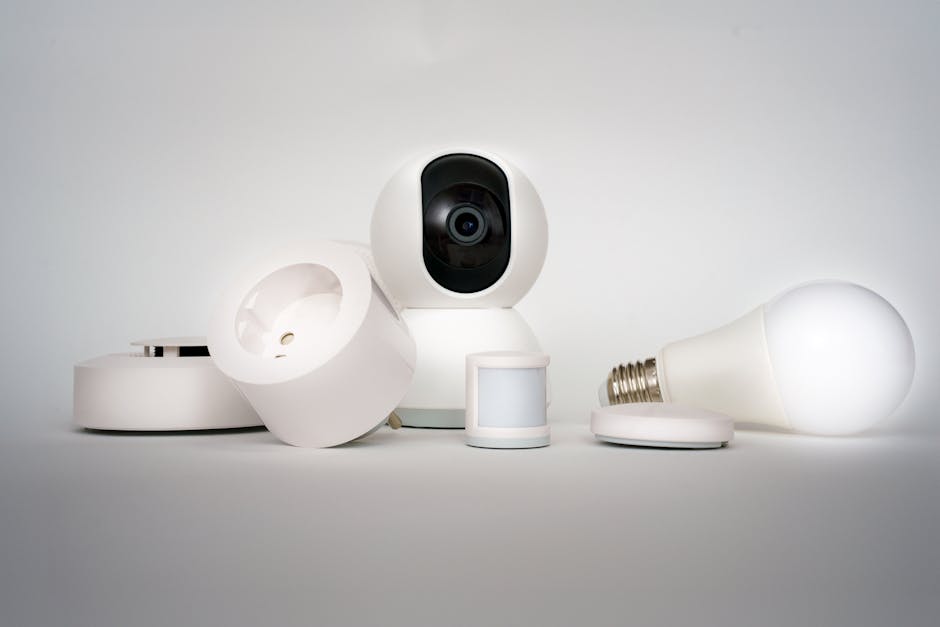
Smart home automation lets you control lighting, temperature, and security from your phone—but costs vary wildly depending on what you choose. Whether you’re upgrading one room or your entire house, understanding the price breakdown helps you make smart decisions that actually save money. Let’s walk through realistic costs for each system so you can plan your smart home upgrade without breaking the bank.
Smart Lighting Costs: From Basic to Premium
Smart lighting is often the easiest entry point into home automation, and the good news is you have budget-friendly options. Basic smart bulbs run $10–$25 per bulb, while premium brands can hit $40–$60 each. If you have 20 light fixtures in your home, that’s a potential range of $200 to $1,200 just for bulbs.
But here’s where it gets interesting: smart lighting actually saves money on your electricity bills. Smart bulbs use 75–80% less energy than traditional incandescent bulbs, and automation features let you turn lights off automatically when rooms are empty. Over five years, that energy savings typically covers the initial investment.
You’ll also want to consider smart switches and dimmers, which range from $25–$100 per switch. These work with regular bulbs and offer more flexibility if you rent or prefer not to replace every bulb. Starter kits with a hub and several bulbs usually cost $50–$150, making them an affordable way to test the system before fully committing.
Smart Thermostat Investment: Long-Term Savings Win
Smart thermostats are where automation really pays off financially. They typically cost $150–$400 for the device itself, with professional installation adding $100–$200. Yes, that’s an upfront investment, but heating and cooling account for about 40% of most utility bills.
Smart thermostats learn your schedule and preferences, automatically adjusting temperatures to save energy when you’re away or asleep. Studies show homeowners save $10–$23 per month on average, which works out to $120–$276 annually. Over a 10-year lifespan, that’s $1,200–$2,760 in savings—making your smart thermostat essentially free within 3–4 years.
Different models offer varying features. Basic smart thermostats start around $150 and handle scheduling and remote control. Mid-range options ($250–$350) add learning capabilities and detailed energy reports. Premium models ($350–$400) include advanced features like occupancy sensors and geofencing. Choose based on your actual needs—that $400 model won’t save significantly more than a $250 option if you don’t use its extra features.
Smart Security System Costs: Protection at Scale
Smart security is where costs can escalate quickly, but you control the scope. Entry-level smart security packages—including a hub, door/window sensors, and a motion detector—run $200–$400. Mid-range systems add smart locks and cameras, totaling $500–$1,000. Comprehensive systems with multiple cameras, full coverage, and monitoring services can exceed $2,000.
Monthly monitoring fees are crucial to calculate. Professional monitoring typically costs $30–$50 monthly, adding $360–$600 annually. Some systems offer free monitoring through smartphone apps, eliminating this recurring cost but requiring you to respond to alerts yourself.
Smart locks alone range from $100–$300 depending on brand and features. Cameras vary wildly: basic indoor cameras cost $50–$150, while outdoor cameras run $150–$400 each. High-resolution 4K cameras with advanced motion detection can reach $500+. Video doorbell cameras ($150–$300) offer dual functionality, replacing your existing doorbell while adding security.
Consider your actual security needs. If you live in a low-crime area, a basic system with door sensors and a smart lock might suffice. Urban apartment dwellers might prioritize a doorbell camera and window sensors. Larger homes or higher-security situations may justify multiple cameras and professional monitoring.
How to Budget for Your Smart Home Investment
The best way to plan your smart home costs is mapping out priorities and timelines. Rather than overspending on everything at once, consider a phased approach: start with smart lighting or a thermostat, add security elements next, and expand based on what you actually use.
To calculate your specific smart home expenses and compare long-term savings, check out our smart home cost calculator. You can input your current energy usage, desired automation features, and estimated costs to see your potential savings over 5, 10, and 15-year periods. This tool helps you prioritize investments that deliver the best return for your situation.
Remember that many smart home devices qualify for utility rebates or tax credits. Check your local utility company’s website for incentives—some offer $50–$200 rebates on smart thermostats alone. Those savings stack on top of your energy bill reductions.
Frequently Asked Questions
Do I need a smart home hub?
Many basic devices work directly with your WiFi and smartphone app, so a hub isn’t always required. However, a hub becomes valuable when you want to connect multiple device types, create automation routines (like “lock door when thermostat detects I’ve left”), or maintain control during internet outages. Hubs typically cost $50–$150 and use less power than individual devices, so they often pay for themselves through efficiency gains.
What’s the average total cost for a complete smart home?
A fully automated home—including smart lighting throughout, thermostat, security system with cameras, and smart locks—typically costs $2,000–$5,000 depending on house size and feature preferences. A modest smart home setup covering essentials might run $800–$1,500. Most people start with $300–$500 and expand over time.
Will smart home devices actually reduce my energy bills?
Yes, but realistically. Smart thermostats and lighting reduce energy usage, but savings depend on your current habits and energy rates. Expect $10–$50 monthly savings on average. Your actual numbers depend on local utility costs, home insulation quality, and how consistent you are with automation settings. That’s why using a calculator for your specific situation beats guessing.
- Smart Home Starter Kits (Echo/Alexa ecosystem) — Perfect complement to the guide’s focus on smart home automation costs. Readers planning their smart home setup would benefit from all-in-one starter bundles that cover lighting, thermostat control, and security integration.
- Smart Thermostat (Nest/Ecobee) — Directly addresses one of the three main cost categories discussed in the post (lighting, thermostat, security). Readers comparing costs would want to see specific thermostat options and current pricing.
- Smart Lighting System (Philips Hue/LIFX) — Covers the lighting automation component mentioned in the title. Readers implementing the cost breakdown would need affordable smart bulb options with various price points to match their budget.
Related: Smart Home Automation Costs: 5 Ways to Save in 2026
Related: DIY Calculator: Your Complete Guide to Smart Home Project Planning