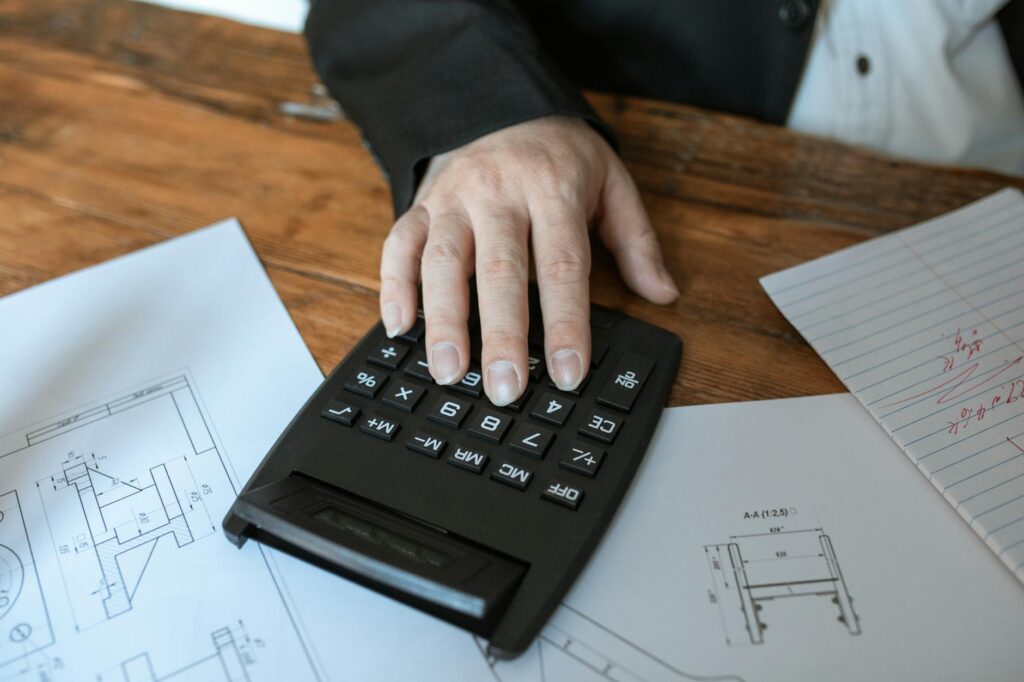
Whether you’re planning a small patio repair or a large driveway installation, calculating the right amount of concrete is critical to your project’s success. A concrete calculator removes the guesswork from material estimation, saving you time, money, and waste. This comprehensive guide walks you through everything you need to know about concrete calculators, how to use them effectively, and why they’re essential for any DIY concrete project.
Why You Need a Concrete Calculator
Ordering the wrong amount of concrete is one of the most common and costly mistakes homeowners make. Too little concrete means returning to the supplier for more material, disrupting your workflow and potentially encountering inconsistent color or texture in your finished product. Ordering too much leaves you with excess material that’s expensive to dispose of or wastes money if left unused.
A concrete calculator accounts for multiple variables that affect your material needs, including the dimensions of your project area, the thickness of the concrete slab, and regional variations in concrete density and pricing. For a typical 10-foot by 12-foot patio with a 4-inch depth, you’ll need approximately 1.5 cubic yards of concrete—equivalent to roughly 2,250 pounds. Without a calculator, many homeowners estimate this incorrectly, leading to costly overages or shortages.
Beyond material estimation, a quality concrete calculator provides cost projections based on current concrete prices in your region, helping you budget accurately before you begin work. This transparency allows you to compare project costs against professional installation services and make informed decisions about your DIY approach.
How to Use a Concrete Calculator
Using a concrete calculator is straightforward, but accuracy in your measurements is essential. Start by measuring the length, width, and depth of your project area in feet or inches. For rectangular areas like driveways or patios, simply measure from end to end and side to side. For irregular shapes, break the area into smaller rectangles, calculate each section separately, and add the results together.
Next, decide on your concrete thickness. Standard concrete slabs for patios and walkways typically use 4 inches, which provides adequate durability for foot traffic. Driveways require at least 4 to 6 inches of thickness to handle vehicle weight, while structural applications may need 8 inches or more. The calculator will use this thickness measurement along with your square footage to determine the total cubic yards needed.
Enter these measurements into the calculator, and it instantly shows you how many bags or cubic yards of concrete you’ll need. Most calculators also break down the cost based on local pricing data, showing you whether you should purchase ready-mix concrete delivered by truck, pre-mixed bags from a hardware store, or bulk concrete from a supplier. For smaller projects under 5 cubic yards, bags are often more economical, while larger projects benefit from ready-mix delivery.
After obtaining your cubic yardage, add 10 percent to your order as a safety margin for uneven ground, spillage, and variations in mixing consistency. A calculator automatically applies this buffer, ensuring you won’t run short mid-project.
Common Concrete Projects and Their Calculator Requirements
Different concrete projects demand different thicknesses and approaches, which your calculator needs to reflect. A typical residential walkway measuring 3 feet wide and 20 feet long with 4-inch depth requires approximately 0.75 cubic yards of concrete, costing between $90 and $150 depending on your location and concrete type.
A standard 10-foot by 20-foot driveway requires significantly more material. With 4-inch thickness, you’ll need about 2.5 cubic yards, costing between $250 and $450. If you increase the thickness to 6 inches for better durability under vehicle weight, the cost jumps to 3.7 cubic yards and $350 to $650.
Larger patios, such as a 16-foot by 16-foot entertaining space, need approximately 3.2 cubic yards at 4-inch depth, representing a material cost of $320 to $500. Small foundation repairs or post footings might only require 0.15 cubic yards of concrete, costing $20 to $40 per hole.
A quality concrete calculator lets you input these various scenarios and see how changing the dimensions or thickness affects your material needs and overall project budget. This flexibility helps you explore cost-saving options before committing to your final design.
Factors That Affect Concrete Quantity and Pricing
Beyond basic measurements, several factors influence your concrete calculator results. Regional pricing varies significantly—concrete costs more in rural areas with limited supplier access compared to urban regions with multiple suppliers competing for business. Expect to pay $125 to $200 per cubic yard in most metropolitan areas, while rural locations may charge $200 to $300 per cubic yard.
The type of concrete also matters. Standard Portland cement concrete is the most affordable option, while high-strength concrete, fiber-reinforced varieties, or specialty mixes cost 15 to 30 percent more. Decorative options like stamped or stained concrete add significant expense beyond basic material costs.
Delivery charges apply when ordering ready-mix concrete, typically ranging from $50 to $200 depending on the distance from the supplier to your project site. Many suppliers charge minimum order fees, making them uneconomical for very small projects. In these cases, pre-bagged concrete purchased from hardware stores becomes your better option despite higher per-yard costs.
Accessibility issues also affect pricing. If the concrete supplier cannot park their truck near your project area, they may charge extra for hand-carrying materials or refuse the delivery altogether. A concrete calculator factors these practical considerations when estimating your true project cost.
Maximizing Accuracy with Your Concrete Calculator
To get the most accurate results from our free DIY calculator, measure your project area at least twice using a steel measuring tape, not a cloth tape which can stretch and provide inaccurate measurements. For very large areas, use a laser measuring tool for precision. Write down your measurements in feet and decimal feet rather than feet and inches to avoid conversion errors.
Account for the slope of your concrete pad. If you’re pouring a driveway or patio that slopes slightly for drainage, use the average depth as your thickness measurement. A concrete calculator simplifies this by allowing depth adjustments for each section of your project.
Consider your subgrade preparation. The depth you enter into your calculator should reflect only the finished concrete slab thickness, not the gravel or sand base layer underneath. Those materials are calculated separately using different formulas and pricing structures.
Frequently Asked Questions
How much does concrete cost per cubic yard?
Concrete typically costs between $125 and $200 per cubic yard for standard ready-mix delivery in most U.S. locations, though prices vary by region and concrete type. Rural areas and specialty concrete blends may cost $200 to $300 per cubic yard, while pre-bagged concrete from hardware stores averages $5 to $8 per 60-pound bag, which equals roughly $250 to $400 per cubic yard when purchased in smaller quantities.
How do I calculate concrete needed for an irregular shaped area?
Break your irregular shape into smaller rectangles or squares, measure each section separately, calculate the cubic yards for each, and add them together. Most concrete calculators allow you to input multiple sections at once, automatically summing the total material needed and providing an aggregate cost estimate for your entire project.
What thickness of concrete do I need for a residential driveway?
Residential driveways require a minimum of 4 inches of concrete thickness in mild climates, but 6 inches is recommended for areas with freeze-thaw cycles and heavy vehicle traffic. Using a concrete calculator, you can compare the cost difference between 4-inch and 6-inch depths to determine the best investment for your climate and expected usage.
Should I add extra concrete to my order for waste?
Yes, adding 10 percent extra concrete to your order accounts for uneven ground, spillage during pouring, and mixing inconsistencies. Most professional concrete calculators automatically apply this safety margin, so your final cubic yard estimate already includes this buffer without requiring manual adjustment.
Can I use a concrete calculator for decorative concrete projects?
Standard concrete calculators determine material quantity for basic concrete slabs, which applies to decorative projects too. However, specialty finishes like stamping, staining, or polishing require additional labor and material costs beyond what a basic calculator estimates—you’ll need separate pricing for these premium finish options.
Conclusion
A concrete calculator is an indispensable tool for any homeowner planning a DIY concrete project. By accurately estimating material needs and costs before you start, you eliminate the stress and expense of ordering the wrong amount. Whether you’re pouring a simple walkway or an elaborate patio, taking five minutes to use a calculator saves hours of frustration and hundreds of dollars in wasted materials or unexpected expenses.
The investment in proper planning through calculation ensures your concrete project succeeds from start to finish, delivering professional-quality results at a cost you can control and predict.
Use Our Free DIY Calculator
Stop guessing about your concrete needs. Head to diycalculator.net today and use our free concrete calculator to instantly determine exactly how many cubic yards you’ll need, see detailed cost breakdowns for your specific region, and receive material-saving tips tailored to your project size. Get precise dollar amounts, avoid costly overages, and start your project with total confidence. Try our calculator right now—it takes less than two minutes and could save you hundreds of dollars.
- Concrete Mix (Sakrete or Quikrete) — Direct product need for readers planning concrete projects; essential material they'll purchase after calculating quantities
- Digital Level and Measuring Tools — Practical tools needed for concrete project preparation and accuracy; complements the planning phase discussed in the guide
- Concrete Sealer and Protective Coating — Natural follow-up product for concrete maintenance after project completion; extends concrete lifespan and protects investment
Related: The Complete Guide to DIY Calculators: Tools Every Homeowner Needs
Related: Concrete Calculator: The Complete Guide to Estimating Your Next Project
Related: Concrete Patio Cost Guide: DIY vs Contractor
Related: Concrete Calculator: How to Calculate Concrete Accurately for Any Project