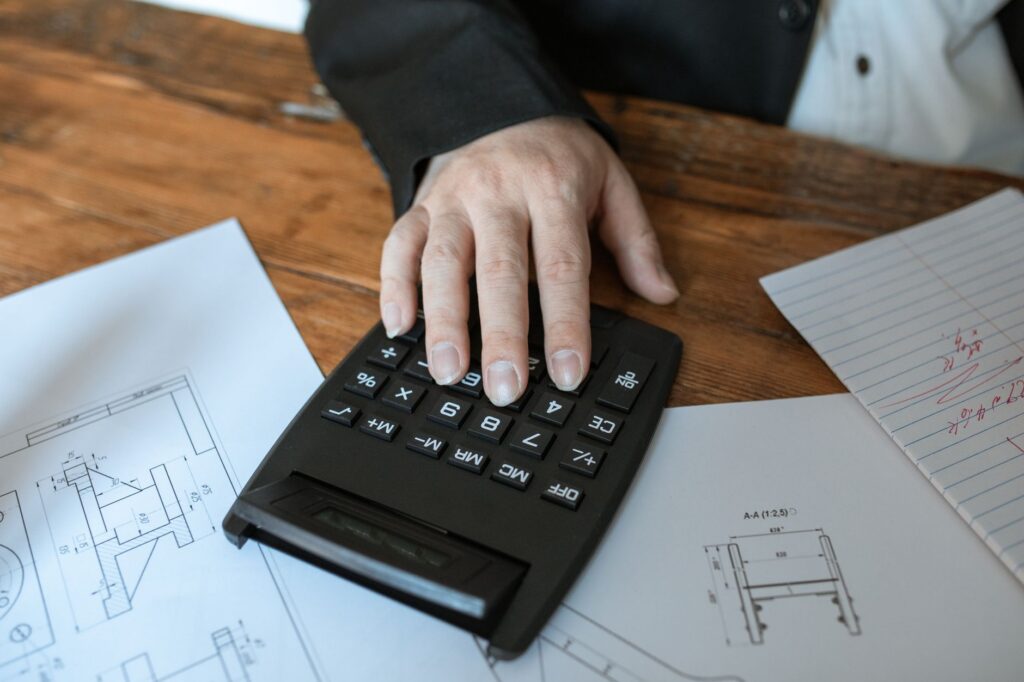
Why Every DIYer Needs a Concrete Calculator Before Mixing a Single Bag
Pouring concrete without doing the math first is one of the most expensive mistakes a homeowner can make. Order too little and you face a cold joint — a visible, structurally weak seam where fresh concrete meets hardened concrete. Order too much and you’re paying for hundreds of pounds of material that ends up hardening in the truck or sitting uselessly in your yard. A concrete calculator eliminates both problems by translating your project’s dimensions into an exact volume measurement, typically expressed in cubic yards or cubic feet, so you can order or mix precisely what you need. (Related: DIY Tool Investment Calculator: Which Essential Tools to Buy vs. Borrow for Home Projects) (Related: The Ultimate Guide to Using a DIY Calculator for Smarter Home Improvement in 2026) (Related: Complete Guide to Attic Insulation Costs and R-Values in 2026) (Related: DIY Home Improvement Cost Calculators for Beginner Projects) (Related: Mulch Calculator: How Much Mulch Do You Need?) (Related: Complete Tank vs Tankless Water Heater Cost Guide 2026)
Concrete is sold by the cubic yard when ordering from a ready-mix supplier, and by the bag when purchasing pre-mixed bags at a home improvement store. One cubic yard equals 27 cubic feet, and a standard 80-pound bag of concrete mix yields approximately 0.60 cubic feet of finished concrete. That means you need roughly 45 bags to fill one cubic yard. Knowing these conversions before you start shopping saves you time, money, and serious frustration on pour day.
The Basic Formula: How a Concrete Calculator Works
At its core, a concrete calculator uses a simple volume formula: Length × Width × Thickness = Volume. The trick is keeping all your measurements in the same unit. Most calculators accept feet and inches, then convert the result to cubic yards automatically, since that’s the standard unit ready-mix companies use for pricing and delivery.
Here’s how the math works for a basic slab. Say you’re pouring a 10-foot by 12-foot patio at a standard 4-inch thickness. First, convert 4 inches to feet: 4 ÷ 12 = 0.333 feet. Then multiply: 10 × 12 × 0.333 = 39.96 cubic feet. Divide by 27 to convert to cubic yards: 39.96 ÷ 27 = 1.48 cubic yards. Most pros recommend adding a 10 percent waste buffer to account for ground irregularities and spillage, bringing your order to approximately 1.63 cubic yards. For this size patio, expect to pay between $250 and $450 for ready-mix delivery, depending on your region and the concrete’s PSI rating.
Different shapes require different formulas. Circular slabs use π × radius² × thickness. Cylindrical footings, such as those used for fence posts or deck piers, use the same circular formula multiplied by depth. A concrete calculator handles all of these shape variations automatically, which is why using one is far more reliable than doing mental math with a tape measure in hand.
Common Projects and Their Typical Concrete Requirements
Understanding typical volume ranges for common projects helps you sanity-check any calculator result before you place an order. A standard 4-inch-thick driveway measuring 16 feet wide by 40 feet long requires approximately 7.9 cubic yards of concrete. At a regional average cost of $130 to $160 per cubic yard for ready-mix in 2026, that puts material costs alone between $1,027 and $1,264 — not including labor, forming, rebar, or finishing.
For smaller projects, pre-mixed bags are often more cost-effective. A 10-foot-by-10-foot shed foundation at 4 inches thick requires about 1.23 cubic yards, or roughly 56 bags of 80-pound mix. At approximately $7 to $9 per bag, you’re looking at $392 to $504 in material — comparable in cost to a small ready-mix order but far more practical when a truck delivery isn’t logistically feasible.
Footings for structural columns or deck posts are typically sized by local building codes. A common specification is a 12-inch-diameter, 48-inch-deep footing. That single footing requires about 0.17 cubic yards or roughly 8 bags of 80-pound mix. If you’re setting 10 posts, that’s 1.7 cubic yards total — enough to justify a small ready-mix order rather than hand-mixing dozens of bags.
Choosing the Right Concrete Mix for Your Project
Not all concrete is equal. The PSI (pounds per square inch) rating tells you the compressive strength of cured concrete, and selecting the wrong mix can compromise your project’s longevity. For residential driveways and patios, a 3,500 to 4,000 PSI mix is the standard recommendation. Sidewalks and footpaths typically use 3,000 PSI. Structural footings, foundation walls, and anything exposed to freeze-thaw cycles should use 4,000 PSI or higher, often with air-entraining admixtures to prevent cracking.
When ordering ready-mix, you’ll also specify the slump — a measurement of workability. A slump of 4 to 5 inches is typical for most flatwork, offering enough fluidity to spread easily without sacrificing strength. Adding too much water to increase workability is a common DIY mistake that can reduce the finished strength by 10 to 15 percent. If you’re mixing bags by hand, follow the manufacturer’s water ratio exactly and use a paddled drill mixer or rented electric concrete mixer for batches larger than 2 bags.
Step-by-Step: How to Use a Concrete Calculator Correctly
Using a concrete calculator takes less than two minutes when you have your measurements ready. Follow these steps to get an accurate result every time.
Step 1: Measure your area. Use a tape measure to record the length and width of your slab or the diameter of your footing. Write down measurements in feet and inches separately to avoid rounding errors.
Step 2: Determine your thickness or depth. For slabs, 4 inches is the residential minimum; driveways should be 5 to 6 inches if you park heavy vehicles. Footings are typically governed by local code — 12 inches deep below the frost line is common in northern climates.
Step 3: Enter values into the calculator. Use our free DIY calculator to input your length, width, and thickness. Select the shape that matches your project — rectangular, circular, or cylindrical.
Step 4: Review the output. The calculator will return cubic yards, cubic feet, and a bag count for 60-pound and 80-pound bags. Note the recommended 10 percent overage already factored into professional estimates.
Step 5: Get your cost estimate. Multiply cubic yards by the local ready-mix price, or multiply bag count by your retailer’s per-bag price. Compare both options to decide which delivery method makes sense for your project size.
Frequently Asked Questions
How many bags of concrete do I need for a 10×10 slab?
A 10-by-10-foot slab poured at 4 inches thick requires approximately 1.23 cubic yards of concrete. That translates to roughly 56 bags of 80-pound mix or about 74 bags of 60-pound mix. Always add one or two extra bags as a buffer for spillage and uneven subgrade.
What is the standard thickness for a concrete driveway?
Residential driveways intended for passenger vehicles should be at least 4 inches thick, but 5 to 6 inches is strongly recommended if you regularly park pickup trucks, SUVs, or recreational vehicles. Thicker slabs significantly reduce the risk of cracking under load and extend the driveway’s functional lifespan to 30 years or more with proper curing.
How much does a cubic yard of concrete cost in 2026?
Ready-mix concrete typically costs between $120 and $165 per cubic yard in 2026, depending on your location, the PSI rating you specify, and current fuel and material surcharges. Delivery minimums usually start at 1 cubic yard, and most suppliers charge a short-load fee of $50 to $150 for orders under 3 to 4 cubic yards.
How long does concrete take to cure?
Concrete reaches approximately 70 percent of its design strength within 7 days under normal temperature and humidity conditions, and achieves full cure at 28 days. You can typically walk on a slab after 24 to 48 hours, but you should keep vehicles off a new driveway for a minimum of 7 days and ideally 28 days to prevent surface damage.
Can I pour concrete in cold weather?
Concrete should not be poured when air or ground temperatures are below 40°F (4°C) without special precautions, because freezing water in the mix will expand and permanently weaken the concrete. In cold conditions, use heated water in your mix, apply insulating blankets after the pour, and consider using a fast-setting mix designed for cold-weather applications. Most ready-mix suppliers can advise on admixtures appropriate for your climate.
Conclusion
Accurate concrete estimation is the foundation of any successful flatwork or structural project. Whether you’re pouring a small garden path, a full driveway, or a series of deck footings, running the numbers before you buy materials saves you from costly over-ordering or the structural risk of under-pouring. Understanding the basic volume formula, knowing which PSI mix to specify, and adding a 10 percent overage buffer are habits that separate successful DIYers from those who make expensive second trips to the hardware store. A reliable concrete calculator makes all of this effortless.
Use Our Free DIY Calculator
Head to diycalculator.net right now and put these calculations to work in seconds. Our free concrete calculator instantly returns your required cubic yards, exact bag counts for both 60-pound and 80-pound mixes, and a side-by-side cost comparison between bagged concrete and ready-mix delivery — including estimated dollar amounts based on current average prices. You
- Concrete Mix – Quikrete 80 lb Bags — Essential consumable for DIY concrete projects; users reading about concrete calculation will need actual concrete mix to pour their projects
- Digital Concrete Mixing Scale — Helps accurately measure concrete ingredients by weight, directly supports proper calculation and mixing techniques discussed in the post
- Concrete Finishing Tool Set — Once concrete is calculated and poured, DIYers need proper tools to finish and level their concrete work professionally
See also: Drywall Calculator: Estimate Sheets & Costs Accurately
See also: How to Use a Mulch Calculator to Save Time and Money on Your Next Landscaping Project
Related: Concrete Slab vs Gravel: Shed Foundation Costs
Related: Concrete Calculator: How to Estimate Concrete Needs and Costs for Any Project
Related: Pouring Concrete Footings: Volume Calculator and Tips