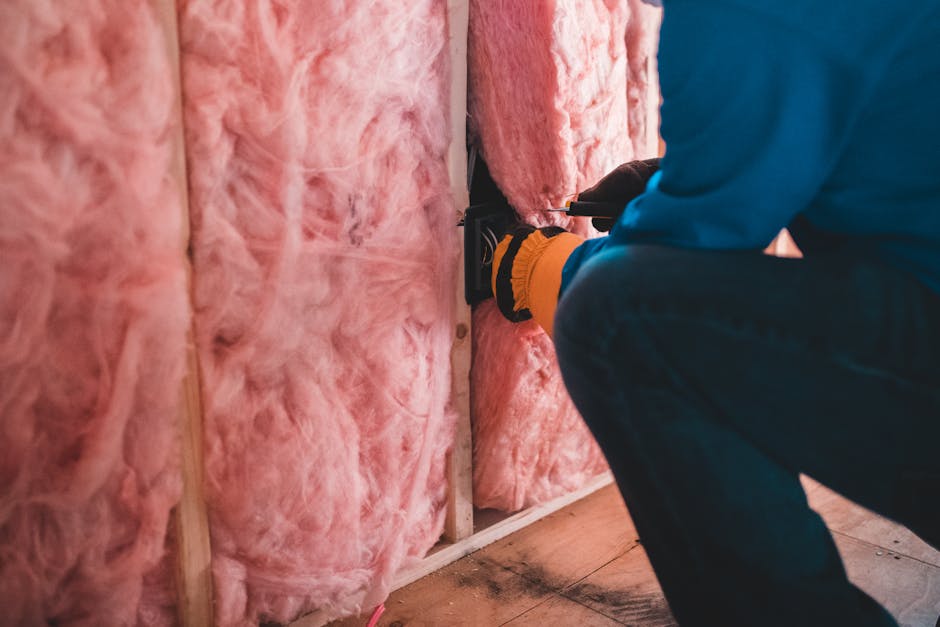
Fiberglass batts cost $0.40–$1.50 per square foot, cellulose runs $0.60–$2.00, and spray foam ranges from $1.00–$4.50 per square foot installed. Fiberglass is the most affordable and DIY-friendly, cellulose offers superior air sealing and eco-credentials, while spray foam delivers the highest R-value per inch and best moisture resistance for complete thermal barriers. (Related: Budget-friendly fall home improvement projects under $100 with cost calculators) (Related: Crown Molding Cost Per Linear Foot: Complete 2026 Guide) (Related: Complete Guide to Fireplace Installation Costs in 2026) (Related: DIY Home Improvement Projects to Replace Expensive Professional Services) (Related: Gravel Calculator: Estimate Yards & Tons for Any Project) (Related: DIY Calculator: The Ultimate Guide to Estimating Home Improvement Costs and Materials)
Fiberglass Insulation: Cost, Performance, and Best Uses
Fiberglass remains the most widely used insulation material in American homes, and for good reason. It’s affordable, widely available, and straightforward enough for confident DIYers to install in open wall cavities and attic floors.
R-Value and Thermal Performance
Fiberglass batts deliver an R-value of approximately R-2.2 to R-2.7 per inch, meaning you’ll need a 2×6 stud wall (about 5.5 inches deep) to achieve R-13 to R-15. Blown fiberglass performs slightly better at R-2.2 to R-4.3 per inch depending on density. One important limitation: fiberglass loses effectiveness when air moves through it freely. It insulates but does not air-seal, which means it should be paired with proper vapor barriers and air sealing measures.
Cost Breakdown for Fiberglass
- Batts (DIY): $0.40–$0.80 per square foot in materials
- Blown fiberglass (professional): $0.80–$1.50 per square foot installed
- Best applications: Attic floors, open wall cavities during new construction or renovation
For a standard 1,500-square-foot attic insulation project targeting R-38, expect to spend $600–$1,200 in materials alone if you go the DIY batt route. Use our insulation cost calculator to get a precise estimate based on your attic dimensions and desired R-value.
Cellulose Insulation: Eco-Friendly Performance at a Mid-Range Price
Cellulose insulation is made from roughly 75–85% recycled paper products, making it one of the most environmentally responsible choices available. According to the EPA’s sustainable materials guidelines, using recycled-content building materials like cellulose significantly reduces embodied carbon in home construction and renovation projects.
R-Value and Air Sealing Advantages
Cellulose achieves R-3.2 to R-3.8 per inch — meaningfully better than fiberglass batts. More importantly, blown cellulose settles into irregular cavities, around wires, and into tight corners far more effectively than rigid batts. This dense-pack behavior naturally reduces air infiltration, giving cellulose a real-world thermal advantage that raw R-value numbers don’t fully capture.
Cost Breakdown for Cellulose
- Blown cellulose (DIY rental blower): $0.60–$1.20 per square foot in materials
- Dense-pack professional install: $1.20–$2.00 per square foot installed
- Best applications: Attic floors, existing wall cavities (retrofit dense-pack), cathedral ceilings
One consideration: cellulose can absorb moisture if installation is improper or vapor management is neglected. Always verify local building codes for vapor retarder requirements. Your regional climate zone will determine whether you need a Class II or Class III vapor retarder alongside cellulose.
Spray Foam Insulation: Maximum Performance, Premium Price
Spray polyurethane foam (SPF) splits into two categories — open-cell and closed-cell — and they perform quite differently. Understanding which type fits your project is critical before committing to the higher price tag.
Open-Cell vs. Closed-Cell Spray Foam
Open-cell foam expands aggressively to fill cavities and delivers R-3.5 to R-3.8 per inch. It’s vapor-permeable and relatively affordable in the spray foam category at $0.44–$0.65 per board foot. It excels at sound dampening and air sealing in interior applications like rim joists and attic floors.
Closed-cell foam is the performance champion, reaching R-6.0 to R-7.0 per inch — roughly double fiberglass. Its rigid structure adds structural strength, resists moisture intrusion, and acts as a vapor barrier. Cost reflects that premium: $1.00–$2.00 per board foot for the material alone, with professional installation often pushing total costs to $3.00–$4.50 per square foot.
Cost Breakdown for Spray Foam
- Open-cell foam (professional): $1.00–$2.00 per square foot installed
- Closed-cell foam (professional): $2.50–$4.50 per square foot installed
- Best applications: Crawl spaces, rim joists, unvented attic assemblies, basement walls, areas with moisture exposure
Spray foam almost always requires professional installation due to chemical handling and safety requirements. The EPA’s spray polyurethane foam safety guidance recommends homeowners vacate the property during application and follow re-entry timelines specified by the installer.
How to Use the Calculator to Estimate Your Insulation Project
Before purchasing any insulation material, running accurate numbers saves you from costly over-ordering or mid-project shortages. Our home renovation cost estimator lets you compare total project costs across different insulation types side by side.
Here’s how to get the most accurate result:
- Measure your total square footage — length times width of the space you’re insulating, not your home’s footprint.
- Identify your target R-value — check the Department of Energy’s climate zone map for your region’s recommended R-values.
- Select your insulation type — the calculator adjusts thickness requirements and cost estimates per material automatically.
- Factor in labor — toggle between DIY and professional installation to see how much you can save doing it yourself.
Having these numbers before you visit a supplier puts you in a much stronger negotiating position and ensures your project stays on budget.
Frequently Asked Questions
Which insulation type has the highest R-value per inch?
Closed-cell spray foam delivers the highest R-value per inch at R-6.0 to R-7.0, making it ideal when cavity depth is limited but high thermal resistance is required. Fiberglass batts sit at the lower end at R-2.2 to R-2.7 per inch, while cellulose lands in
- Fiberglass Insulation Batts & Rolls Variety Pack — Directly matches the post’s focus on fiberglass as the most affordable and DIY-friendly insulation option, making it ideal for readers planning a DIY insulation project.
- Spray Foam Insulation Kit (Closed Cell) — Addresses readers interested in spray foam’s superior R-value and moisture resistance mentioned in the post, providing a practical solution for those seeking maximum thermal performance.
- Cellulose Loose-Fill Insulation Blower & Accessories — Supports readers choosing eco-friendly cellulose insulation with the equipment needed for installation, complementing the post’s discussion of cellulose’s superior air sealing capabilities.
See also: Water Heater Replacement Costs: Complete Tank vs Tankless Guide 2026
See also: Complete Guide to Garage Epoxy Flooring Cost in 2026
Related: Laminate Underlayment: 5 Types, Thickness & Do You Need It?
Related: Spray Foam vs Batt Insulation: Cost and Performance