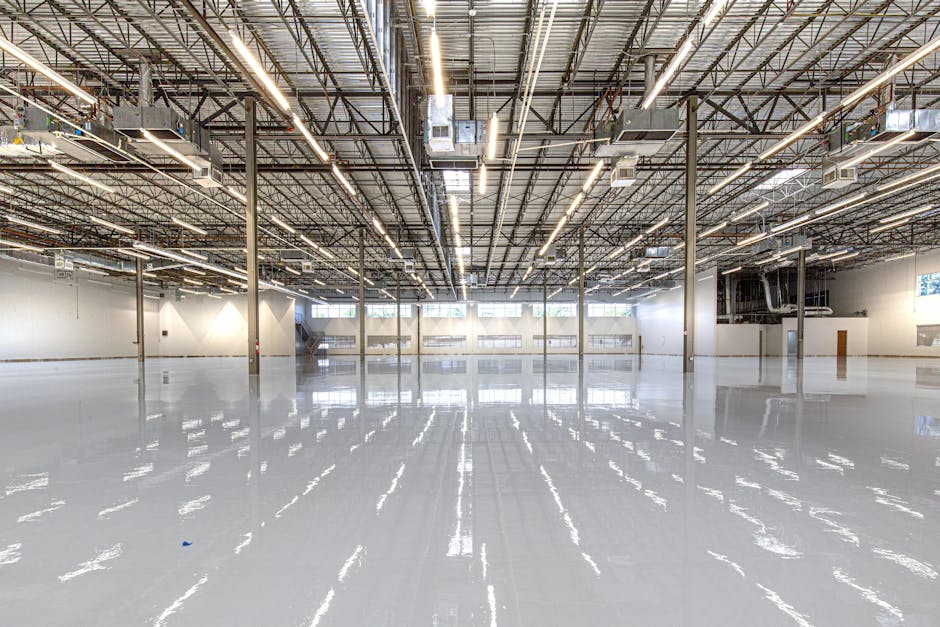
Garage epoxy flooring typically costs $3-12 per square foot for materials, with total projects averaging $500-2,500 for a standard two-car garage. Costs vary based on surface preparation needs, epoxy quality, and whether you hire professionals or complete the work yourself.
Garage Epoxy Flooring Cost Breakdown
Understanding the actual epoxy floor coating price requires breaking down each component of your project. The total investment depends on several variables that homeowners often overlook when budgeting.
Material costs typically represent 40-60% of your total project expense. A two-car garage (approximately 400-500 square feet) requires roughly 2-3 gallons of epoxy resin and hardener, costing between $150-400. Premium epoxy systems designed for high-traffic garage environments run $8-12 per square foot, while budget options range from $3-6 per square foot.
Preparation materials add another layer of expense. You’ll need concrete cleaner ($20-40), degreaser ($15-30), concrete etching solution or grinding supplies ($30-100), primer ($50-150), and safety equipment ($40-80). Total prep materials typically run $155-400 depending on your concrete condition.
Finishing materials such as decorative flakes (optional at $50-150) and topcoat sealer ($40-80) can enhance appearance and durability. Most DIYers spend $200-600 on finishing touches, while others skip optional upgrades to stay within tight budgets.
How much does it cost to epoxy a garage floor?
For a standard 400-square-foot two-car garage, expect to invest between $1,200-4,800 in total materials and tools. This breaks down to approximately $3-12 per square foot depending on epoxy quality and preparation intensity. A basic single-coat application costs $1,200-2,000, while a premium two-coat system with decorative elements reaches $3,500-4,800.
Materials and Tools Needed for Preparation
Proper preparation determines your project’s success more than any other factor. Skipping preparation steps leads to peeling, bubbling, and premature failure—wasting both materials and effort.
Essential cleaning supplies include a pressure washer (rental costs $40-70 per day), concrete degreaser, TSP (trisodium phosphate) cleaner, and stiff-bristled brushes. The concrete surface must be completely clean—any oil, dirt, or residue prevents proper epoxy adhesion.
Concrete surface preparation requires either a concrete grinder (rental $50-100 daily) or chemical etching solution ($30-50). Grinding removes the concrete’s top layer, opening pores for better adhesion. Etching uses acidic solutions to achieve similar results with less equipment. Your existing concrete condition determines which method works best.
Application equipment includes paint rollers and extension poles ($30-50), mixing containers and stir sticks ($15-25), paint trays ($10-20), and measuring tools ($20-40). Invest in quality rollers—cheap rollers shed fibers into your epoxy, ruining the finish.
Safety gear protects against fumes and chemical splashes. You’ll need respirators or ventilation masks ($20-50), safety glasses ($10-20), chemical-resistant gloves ($15-30), and appropriate footwear. Proper ventilation also requires fans ($50-100) to manage odors during curing.
Step-by-Step Application Process
Understanding the epoxy garage floor application guide helps you anticipate timing and labor requirements. Most DIY projects span 3-4 days when accounting for surface prep, application, and curing time.
Day 1: Deep cleaning starts with pressure washing at 3000+ PSI to remove surface dirt and debris. Follow with degreaser application for 15-20 minutes, then scrub with stiff brushes. Rinse thoroughly and allow 24 hours of drying time. Use moisture meters to verify the concrete is completely dry before proceeding.
Day 2: Etching or grinding opens the concrete pores. For chemical etching, apply the solution per manufacturer instructions, typically leaving it for 30 minutes, then scrubbing and rinsing thoroughly. For grinding, work in overlapping passes until the surface feels like sandpaper. Vacuum up all dust completely.
Day 3: Epoxy application begins with primer application if using a primer-included system. Mix epoxy components exactly per instructions—improper ratios cause curing problems. Apply using a roller in overlapping passes. Work in small sections (8×8 feet) to maintain a wet edge and prevent lap marks. The first coat typically cures for 6-8 hours before applying the second coat.
Day 4: Finishing and curing involves applying a second coat if desired, then allowing full curing (typically 48-72 hours) before allowing foot traffic. Keep the space well-ventilated throughout the curing period.
Factors That Affect Total Project Cost
Garage epoxy flooring cost variations stem from seven primary factors that homeowners should evaluate before purchasing materials.
Concrete condition dramatically impacts preparation costs. Lightly-stained floors need basic cleaning ($100-150 worth of materials), while heavily stained, sealed, or painted concrete requires grinding ($300-600 in equipment rental and supplies). Cracked concrete may need repair before epoxy application, adding $200-800 to your budget.
Epoxy system quality ranges from $3-12 per square foot. Budget water-based epoxy offers easier cleanup but less durability. Solvent-based epoxy provides superior adhesion and durability but requires more ventilation and produces stronger fumes. Premium epoxy systems specifically formulated for garages resist chemicals, impact, and UV damage.
Garage size affects material quantities and labor time. Smaller spaces (200-300 sq ft) may see higher per-square-foot costs due to fixed preparation costs spread across fewer square feet. Larger spaces (500+ sq ft) achieve lower per-square-foot pricing but require more material purchases.
Decorative elements like color flakes, metallic pigments, or anti-slip additives range from $50-300. These enhance appearance and functionality but aren’t essential for basic protection.
Professional installation vs DIY creates the largest cost variance. Professional installers charge $10-25 per square foot labor, adding $4,000-12,500 to a typical two-car garage. However, professionals guarantee workmanship, have industrial equipment, and complete projects faster.
DIY vs Professional Installation Costs
Can you apply epoxy flooring yourself? Yes, DIY epoxy application is achievable for most homeowners with careful preparation and attention to instructions. The learning curve is moderate—surface preparation matters far more than application technique.
DIY projects cost $1,200-2,500 for a two-car garage when you invest in materials and basic equipment rental. You’ll spend 20-30 hours over 4-5 days on the complete project. The advantage: complete control over timing and color selection.
Professional installation costs $5,500-15,000 for the same garage but includes labor warranty, professional-grade equipment, and guaranteed results. Professionals typically complete projects in 1-2 days and offer 5-10 year product warranties. If your concrete requires extensive grinding or you need the floor ready quickly, professional installation justifies the cost.
Consider hybrid approaches: hire professionals for concrete grinding and surface preparation, then apply epoxy yourself to save 40-50% on total costs.
Related: garage epoxy flooring cost breakdown
Related: vinyl siding replacement costs
Related: complete guide to DIY calculators
Related: mulch calculator for landscaping
Related: concrete calculator guide
How to Use the Calculator
- Rust-Oleum EpoxyShield Garage Floor Coating Kit — Direct DIY epoxy flooring solution that matches the post’s focus on garage epoxy costs and DIY options for homeowners budgeting $500-2,500 projects
- Quikrete Self-Leveling Floor Resurfacer — Essential surface preparation product for garage floors that the post mentions as a key cost variable; helps achieve professional results for DIY applications
- DEWALT Concrete Floor Grinder/Surface Preparation Tool — Tool rental/purchase option for surface preparation step mentioned in post; supports both DIY and professional-quality floor prep before epoxy application