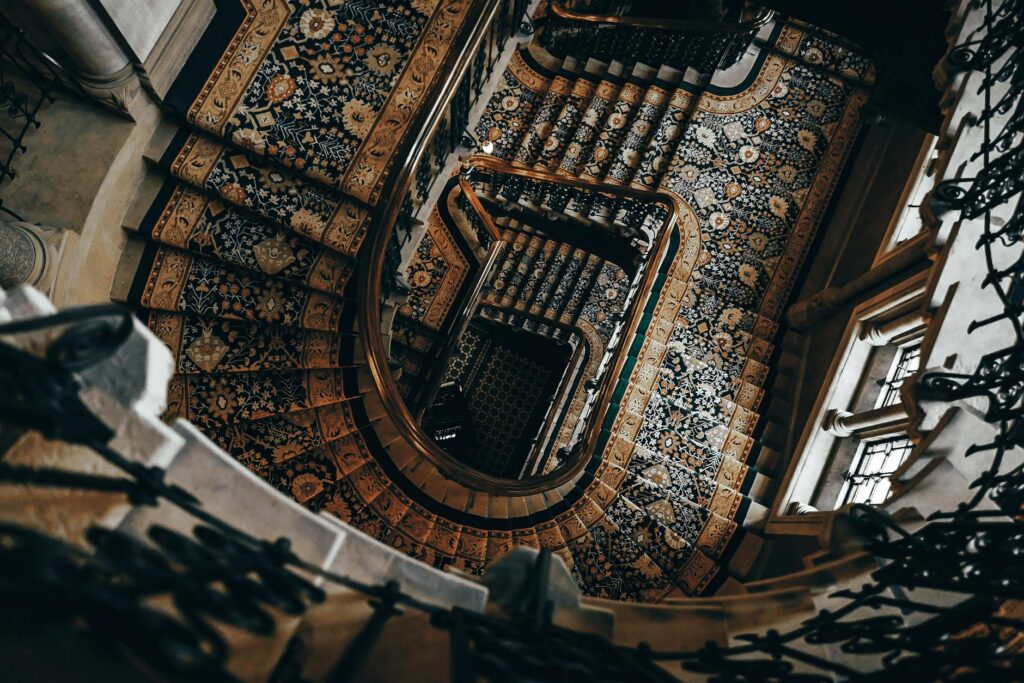
When renovating your staircase, material choice dramatically impacts both your budget and home value. Carpet typically costs $800–$1,500 installed, hardwood ranges from $1,500–$3,000, and tile runs $2,000–$4,500, with prices varying by regional labor rates, stair complexity, and material quality. Understanding these cost differences helps you make an informed decision that aligns with your home’s style and your renovation budget.
Carpet Stair Costs and Installation Details
Carpet remains the most affordable staircase flooring option for most homeowners. According to the National Association of Home Builders (NAHB), residential carpet installation averages $8–$12 per square foot, though stairs typically require premium-grade materials for durability and safety.
For a standard 13-step staircase with a 36-inch width, you’ll need approximately 65–75 square feet of carpet (accounting for treads, risers, and wraparound). This translates to material costs of $400–$700, plus installation labor ranging from $400–$800. Budget an additional $150–$300 for padding and underlayment, which extend carpet lifespan on high-traffic stairs.
Carpet advantages include sound absorption, safety (reduced slipping), and easy installation. However, stairs endure concentrated foot traffic—the edge wear is noticeable within 3–5 years. Plan for replacement every 7–10 years, making long-term costs higher than harder surfaces. Choose solution-dyed nylon or polyester blends rated for heavy traffic to maximize durability.
Hardwood Stair Costs and Material Selection
Hardwood stairs project elegance and durability, commanding premium pricing. According to the Hardwood Floors Association, solid hardwood installation costs $6–$15 per square foot for materials and labor combined. For stairs, expect the higher end due to complexity and waste in cutting treads and risers.
A standard staircase with solid hardwood runs $1,500–$3,000 installed. Oak and maple (domestic hardwoods) cost $1,500–$2,200, while premium species like walnut or cherry reach $2,500–$3,500. Engineered hardwood offers a budget-friendly alternative at $1,200–$2,000, though it’s slightly less durable for high-traffic applications.
Beyond material and installation, factor in finishing costs ($300–$600 for professional staining and sealing). Hardwood stairs are slip hazards on smooth finishes—budget $100–$200 for stair nosing or traction strips. Refinishing every 10–15 years costs $800–$1,500, making long-term maintenance a consideration. However, hardwood significantly boosts home resale value and lasts 25+ years with proper care.
Tile Stair Costs and Installation Considerations
Tile offers luxury durability but demands the highest upfront investment and specialized installation. Tile material costs range from $3–$12 per square foot depending on ceramic, porcelain, or natural stone selection. Installation labor for stairs averages $10–$20 per square foot due to precision cutting and waterproofing requirements.
A complete tile staircase installation totals $2,000–$4,500. Ceramic tile ($2,000–$2,800) works well for bathrooms and kitchens. Porcelain tile ($2,500–$3,500) resists moisture and staining better, ideal for high-moisture areas. Natural stone—slate, travertine, or marble ($3,500–$4,500)—delivers stunning aesthetics but requires sealing and careful maintenance.
Critical cost additions include slip-resistant coating ($150–$300), grout sealing ($100–$200), and edge trim molding ($200–$400). Tile’s primary drawback is slipperiness; building code compliance often requires textured or sealed surfaces. Repairs are expensive—broken tiles cost $150–$400 per step to replace. However, tile lasts 50+ years and requires minimal maintenance beyond occasional resealing.
How to Use the Calculator
Accurately estimating material quantities and total costs is essential before purchasing. Our flooring calculator helps you input your staircase dimensions, select materials, and instantly calculate square footage needed, material costs, and labor estimates. Simply enter your stair width, height, and tread depth to get precise quantities and regional pricing adjustments for your area.
Frequently Asked Questions
What’s the cheapest way to renovate stairs?
Carpet is the most budget-friendly option at $800–$1,500 total installed cost. If you’re on an extremely tight budget, consider DIY installation (though professional installation ensures safety and warranty coverage). Alternatively, refinishing existing hardwood costs $800–$1,500—significantly less than replacement if your current stairs are solid wood underneath.
Which stair material adds the most home value?
Hardwood stairs provide the best return on investment, typically recovering 80–100% of renovation costs at resale. High-quality tile runs second at 60–80% recovery. Carpet offers the lowest ROI at 40–60% recovery, though it improves overall aesthetics and functionality compared to worn stairs.
Can I mix materials on my staircase?
Yes—combining materials is increasingly popular. For example, hardwood treads with tile risers create visual interest while managing costs (approximately $1,800–$2,800 total). Mixed materials work especially well in homes transitioning between different flooring types. Ensure transition strips prevent tripping and uneven surfaces meet building codes.
Related: staircase flooring cost comparison
Related: crushed stone vs pea gravel comparison
Related: stair stringer calculator guide
Related: mulch calculator guide
Related: concrete calculator estimating materials
Related: roof replacement cost comparison
Related: flooring calculator estimate materials costs
Related: carpet calculator rooms and stairs
Related: asphalt shingles vs metal roofing
Related: concrete patio cost guide
Related: concrete footing volume calculator
Related: fence calculator estimation guide
Related: measure for paint walls trim
Related: paint calculator seasonal guide
Related: concrete calculator guide
Related: concrete calculator materials costs
Related: mulch calculator guide
Related: mulch coverage and costs calculator
Related: paint coverage calculator guide
Related: calculate concrete needed
Related: seasonal flooring installation guide
Related: ultimate guide to DIY calculators
Related: mulch buying guide bags vs bulk
Related: vinyl plank flooring cost guide
- Stair Tread and Riser Installation Kit — DIY installation tools help homeowners save on labor costs mentioned in the article; perfect for budget-conscious renovators
- Carpet Seaming Iron and Installation Tools — Essential tools for DIY carpet installation, directly supporting the carpeting option discussed as the most affordable choice
- Hardwood Floor Nailer and Stapler Combo — Enables DIY hardwood staircase installation to reduce the $1,500–$3,000 labor costs outlined in the post