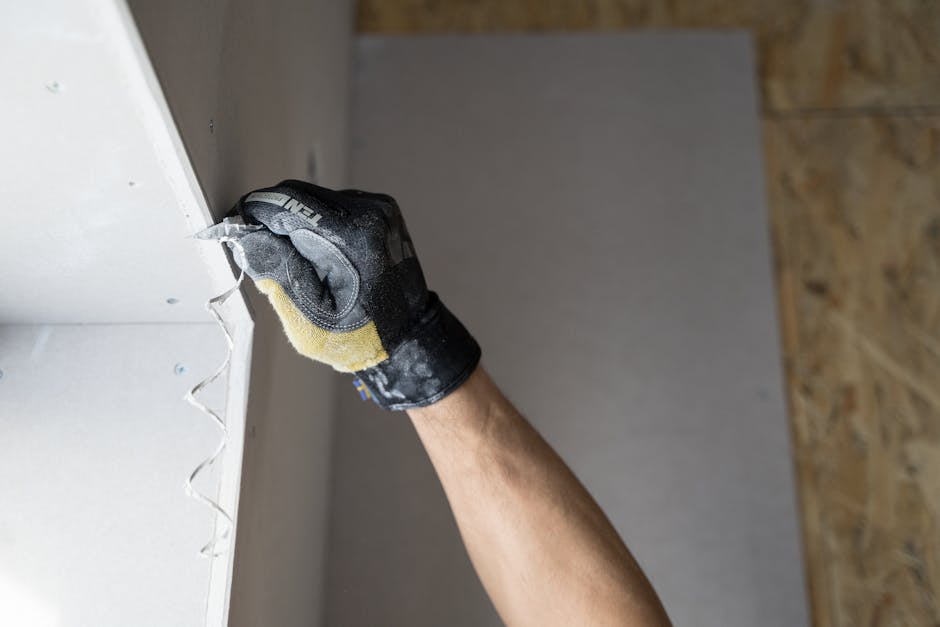
To calculate drywall sheets needed, measure your room’s wall area in square feet, then divide by the sheet size (typically 32 or 54 sq ft). Add 10% for waste. Use our calculator to input room dimensions and instantly get sheet quantity and mudding/taping cost estimates.
How to Use the Drywall Calculator
Our drywall installation calculator takes the guesswork out of planning your project. Here’s exactly how to use it:
Step 1: Gather Your Measurements
Measure the height and width of each wall in your room. Record these in feet (you can use decimals for inches—for example, 8 feet 6 inches = 8.5 feet). Don’t forget to measure closets, alcoves, or any irregular wall spaces separately.
Step 2: Enter Room Dimensions
Input your room’s total length, width, and ceiling height into the calculator. The tool automatically calculates total wall surface area in square feet. This is the foundation of knowing how many drywall sheets do I need for accurate project planning.
Step 3: Select Sheet Size
Choose your drywall sheet dimensions. Standard 4×8 sheets offer 32 square feet of coverage, while 4×12 sheets provide 48 square feet. Some contractors prefer 4.5×9 sheets (about 40.5 sq ft) for efficiency. The calculator adjusts automatically based on your selection.
Step 4: Account for Waste
The calculator adds 10% waste automatically—this covers cutting errors, damaged sheets, and architectural features like windows and doors. Experienced contractors often add 15% for complex rooms, which you can adjust in the tool.
Step 5: Get Your Estimate
The calculator provides your total sheet count, labor costs, and drywall taping and mudding cost estimates. You’ll see material costs broken down by component, making it easy to create a budget for your contractor or DIY project.
How Many Sheets of Drywall Do You Need
The fundamental calculation is straightforward: divide your total wall area by your sheet size, then add waste.
Basic Formula:
(Total Wall Area ÷ Sheet Size) × 1.10 = Sheets Needed
Example Calculation:
For a 12×10 room with 8-foot ceilings:
- Two 12-foot walls: 12 × 8 = 96 sq ft each (192 total)
- Two 10-foot walls: 10 × 8 = 80 sq ft each (160 total)
- Total wall area: 352 sq ft
- Using 32 sq ft sheets: 352 ÷ 32 = 11 sheets
- Adding 10% waste: 11 × 1.10 = 12.1 sheets (round to 13)
For larger projects or rooms with multiple windows and doors, subtract window/door openings (typically 15-20 sq ft per standard opening) to reduce sheet count and costs.
How do I calculate how many drywall sheets I need for my room?
Measure all wall dimensions, multiply height by width for each wall, add all wall areas together, then divide by your chosen sheet size. Don’t forget to add 10-15% extra for waste and mistakes. Our drywall installation calculator performs this instantly—just input your room dimensions and it handles the math automatically.
Drywall Taping and Mudding Costs
After hanging drywall sheets, finishing comes next. This involves taping seams, applying joint compound (mud), and sanding smooth. Labor and material costs vary significantly by location and project complexity.
How much does drywall taping and mudding cost per square foot?
Professional drywall taping and mudding typically costs $1.50 to $3.50 per square foot, depending on your region and finish quality. For a standard “3-coat” finish (primer coat, finish coat, and final coat), expect to pay toward the higher end. Simple 2-coat finishes run $1.50–$2.00 per square foot.
For a 350 square foot room:
- 2-coat finish: $525–$700
- 3-coat finish: $700–$1,050
These costs typically exclude primer and paint. Material costs for joint compound run roughly $0.15–$0.30 per square foot when calculated separately.
Labor is the largest expense. Experienced tapers work faster and produce superior results, which justifies higher hourly rates. DIY mudding saves money but requires practice to achieve professional-looking results.
Drywall Installation Cost Breakdown
Understanding the full cost picture helps you budget accurately. Installation expenses include materials, labor, and finishing supplies.
Material Costs Per Sheet:
- Standard 4×8 drywall: $12–$18 per sheet
- Fire-rated or moisture-resistant: $16–$25 per sheet
- Joint compound (5-gallon bucket): $15–$25
- Drywall tape: $10–$15 per roll
- Fasteners (screws/nails): $5–$10 per project
Labor Costs:
- Hanging (installation): $1.50–$3.00 per sheet
- Taping and mudding: $1.50–$3.50 per square foot
- Sanding and finishing: $0.75–$1.50 per square foot
For our 350 square foot example room with 13 sheets:
- Drywall sheets: 13 × $15 = $195
- Installation labor: 13 × $2.25 = $29.25
- Taping materials: ~$30
- Taping labor: 350 × $2.50 = $875
- Total estimate: $1,129–$1,400
Regional variations matter significantly. Urban markets and areas with high labor costs run 30–50% higher than rural regions. Using our construction cost calculator helps adjust estimates for your local market.
Tips for Accurate Measurements
Use a 25-foot tape measure for longer walls—it’s more accurate than extending a shorter tape multiple times. Measure at least three points on each wall (top, middle, bottom) since older homes often have slightly uneven walls.
Account for architectural features: Mark window and door locations on your sketch. While the 10% waste factor generally covers these, accurate measurements prevent over-purchasing expensive materials.
Check ceiling height at multiple points in the room. Sloped or vaulted ceilings require additional calculations
- Drywall Taping Knife Set — Essential tool for mudding and finishing drywall. Users reading a drywall guide are likely planning a project and need quality finishing tools.
- Drywall Compound (Joint Compound/Mud) — Core material needed for mudding and taping drywall. Directly relevant to the post’s focus on mudding cost estimates and drywall finishing.
- Drywall Saw & Installation Kit — Practical tool for cutting and installing drywall sheets. Complements the calculator’s focus on sheet quantity and DIY installation guidance.
Related: The Complete Drywall Calculator Guide: How Many Sheets for Your Room in 2026
Related: Essential ADA Ramp and Grab Bar Costs in 2026: Complete Budget Guide
Related: Door Replacement Costs: Exterior vs Interior Guide
Related: Drywall Calculator: Sheets, Tape, and Mud Quantities Explained
Related: How Much Drywall Do I Need? Room-by-Room Guide
Related: 5 Basement Ceiling Options: Drop vs Drywall vs Exposed Costs 2026
Related: Drywall Calculator: Estimate Sheets & Costs Accurately